
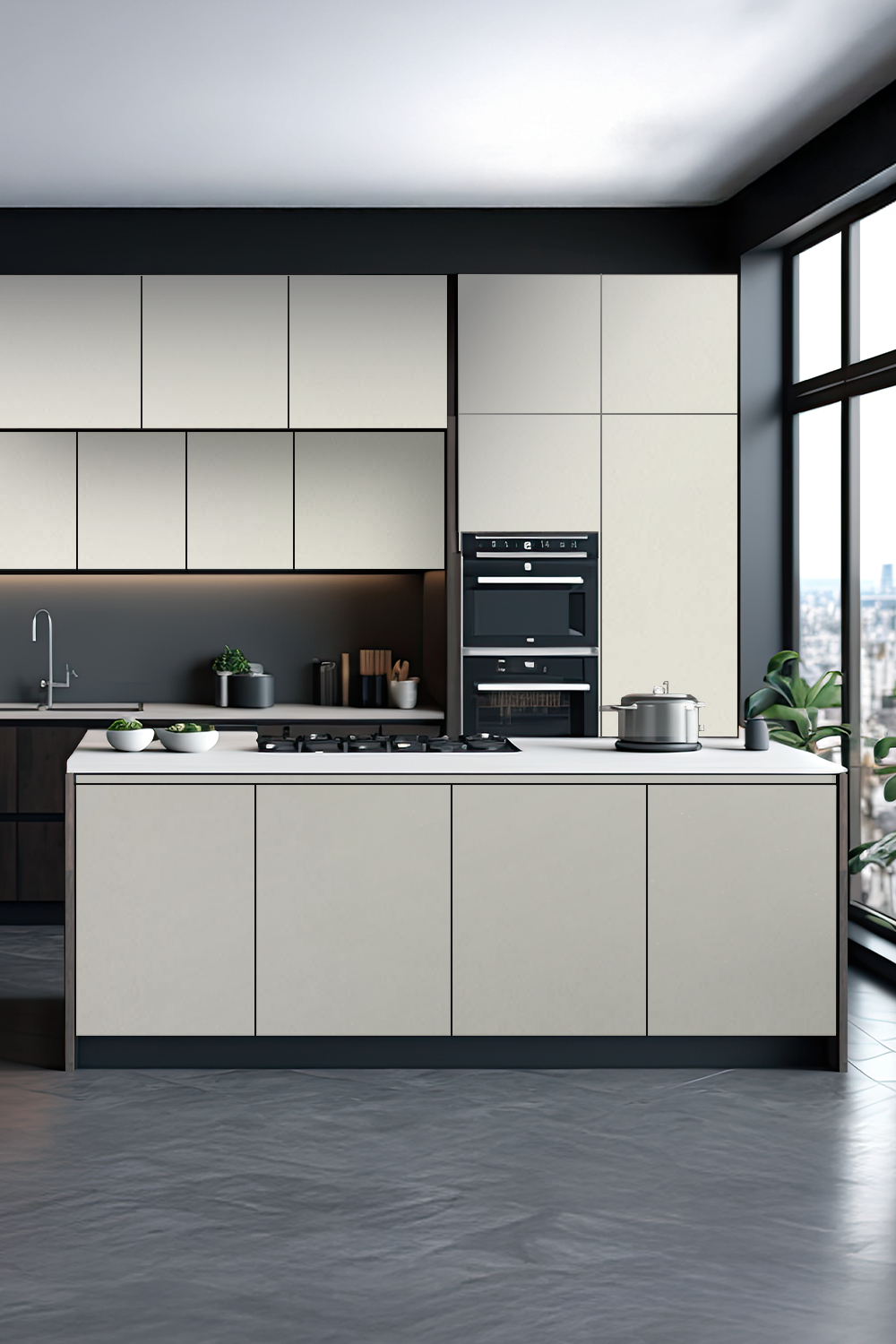
In recent times, kitchens have moved beyond being purely functional spaces to becoming carefully curated environments, where material choice, colour balance, and surface performance work in perfect harmony. That explains the reason why kitchen laminate designs are no longer selected only for durability or ease of maintenance. Instead, they now play a central role in defining the mood of the space and supporting modern living habits. This shift is reflected in the growing preference for refined textures, layered finishes, and thoughtful colour combinations that feel timeless rather than trend-driven. From soft, muted palettes that bring visual calm to bolder contrasts that add character, laminate finishes are being used to create cabinets that feel intentional and well considered. In 2026, the focus is on designs that adapt to evolving lifestyles while maintaining long-term visual appeal.
This article explores the top kitchen laminate designs and colour combinations shaping stylish cabinets in 2026, highlighting how the right laminate choices can elevate everyday kitchens into cohesive, design-forward spaces without compromising practicality.
Also Read: 8 Inspiring Kitchen Design Ideas Using Greenlam Laminates
What are Kitchen Laminates & Why They Matter in Modern Design
Kitchen laminates are engineered decorative surfaces used primarily on cabinet shutters, drawer fronts, tall units, and pantry doors. Manufactured by bonding multiple layers of Kraft paper under high pressure, laminate sheets create a durable and visually consistent surface that performs well in demanding environments such as kitchens.
In modern design, laminates matter because they offer control. Unlike natural materials that vary from piece to piece, laminates deliver uniformity across large cabinetry runs, allowing designers to execute precise visual concepts. This consistency becomes especially important in open kitchens, where cabinets are visible from living or dining areas.
From minimalist flats to expansive family homes, laminated kitchen cabinets provide a balance between aesthetics and practicality. They support a wide spectrum of laminate design, from subtle and understated to bold and expressive, without compromising durability.
Benefits of Kitchen Laminates Over Other Materials
Kitchen laminates continue to be a preferred choice for cabinetry because they strike a balance between durability, hygiene, and design flexibility. In spaces where heat, moisture, and frequent use are unavoidable, laminate sheets offer dependable performance while supporting a wide range of kitchen laminate design possibilities.
- High Resistance to Heat, Moisture, and Stains: Compared to painted surfaces or veneers, kitchen laminates perform better under everyday cooking conditions. Quality decorative laminates resist moisture, heat, and staining, allowing laminated kitchen cabinets to retain their finish despite regular cleaning, exposure to oils, and contact with spices.
- Hygienic and Easy to Maintain Surfaces: Modern high-pressure laminates are engineered to limit bacterial growth, making them suitable for food-preparation areas. This hygienic quality is particularly valuable in high-usage kitchens, where ease of cleaning and surface safety are essential rather than optional.
- Greater Design Flexibility: Laminate sheets allow designers to experiment freely with colour, texture, and pattern. Unlike more delicate natural materials, laminates support bold laminate design choices without introducing long-term maintenance challenges, expanding creative possibilities for contemporary kitchens.
- Affordability Without Compromising Quality: Kitchen laminates offer a cost-effective alternative to many natural and painted finishes while still delivering durability and design versatility. Laminate sheets allow homeowners to achieve a refined kitchen laminate design and well-finished laminated kitchen cabinets without the higher material and maintenance costs often associated with wood, stone, or specialised surface treatments.
Kitchen Laminate Design Trends to Try in 2026
Kitchen laminate design in 2026 reflects a shift towards thoughtful restraint, tactile appeal, and personal expression. Rather than chasing short-lived trends, homeowners and designers are focusing on laminate designs that enhance usability while adding visual depth. From softened minimalism to expressive colour and texture, kitchen laminates are evolving to suit both contemporary lifestyles and long-term living needs.
Modern Minimalist Laminates
Minimalism remains a dominant influence, but its expression has softened. Rather than stark whites and clinical finishes, modern minimalist kitchens now lean towards muted tones and tactile surfaces.
Matte laminate sheets in neutral palettes create cabinets that visually recede, allowing the kitchen to feel open and calm. Subtle textures replace flat planes, adding depth without visual clutter. This approach works particularly well in compact kitchens, where excessive contrast can feel overwhelming.
Within Greenlam’s catalogue, minimalist aesthetics are supported through understated solids and suede textures that complement contemporary layouts while maintaining a sense of warmth.
Two-Tone & Dual Colour Laminates
Two-tone cabinetry continues to be a practical and visually effective approach to kitchen design. By dividing colours between upper and lower cabinets, designers can manage scale, balance proportions, and enhance spatial perception.
Lighter upper cabinets help kitchens feel taller and brighter, while darker lower cabinets ground the design. Colours such as Mint Green and Grey, and Navy Blue and White, work with dual colour design themes. This contrast also allows deeper shades to be introduced without overpowering the space.
Wood-inspired laminate sheets or darker neutrals on base units, paired with lighter tones above, create laminated kitchen cabinets that feel structured yet fluid. This strategy suits both linear and L-shaped kitchens, adapting easily to different layouts.
Textured & Patterned Laminates
Texture is one of the most significant developments in laminate design. As kitchens become more social spaces, surfaces are expected to engage not just visually but also tactually.
Natural textures inspired by wood grain, bark, and stone introduce character without the unpredictability of raw materials. Textures such as Fawn, Barrel, Canyon, and Veracious Bark in Greenlam’s catalogue reflect this movement, offering depth and warmth while remaining practical for daily use.
Patterned laminates further expand design possibilities. Subtle patterns like Visconti or Kimono bring refinement, while options such as Manila Beige, Smokey Mesh, and Marco Marble add visual rhythm to cabinetry. Used selectively on islands or tall units, these patterns create focal points without overwhelming the kitchen.
Glossy & Metallic Laminates
Gloss finishes are being used more thoughtfully in 2026. Instead of dominating entire kitchens, they now appear as accent elements that reflect light and add a sense of polish.
High Gloss laminates and Satin finishes in Greenlam’s catalogue offer controlled sheen, reducing glare while enhancing brightness. Metallic influences, seen in designs such as Chicago Steel or brushed silver, copper, and gold foils, introduce a subtle industrial or luxury edge when used sparingly.
These finishes are most effective when paired with matte or textured surfaces, creating a layered kitchen laminate design that feels sophisticated rather than excessive.
Bold & Colourful Laminates for Statement Kitchens
While neutral kitchens remain popular, there is renewed interest in expressive colour. Bold laminates are increasingly used to personalise kitchens and break away from uniform palettes.
Digital laminates allow for customised prints, floral motifs, and artistic expressions, making them suitable for accent cabinets or feature walls. These designs appeal to homeowners who view the kitchen as an extension of personal style rather than a purely functional space.
When balanced with neutral surroundings, bold laminates add vibrancy without compromising cohesion.
Best Kitchen Laminates Colour Combinations for Cabinets
Colour plays a decisive role in how a kitchen is perceived, influencing brightness, spaciousness, and overall mood. The right kitchen laminate colour combination can make compact kitchens feel open, large kitchens feel balanced, and everyday cabinetry feel intentional. In 2026, colour choices are guided by harmony, contrast, and the way cabinets interact with light and surrounding materials.
Classic Monochrome Combinations (White, Grey & Black)
Monochrome kitchens remain timeless because they adapt easily to changing decor. White, grey, and black combinations create clean, versatile backdrops that work across kitchen sizes. Whether you are inspired by Pantone colour of the year 2026, Cloud Dancer, or love the everlasting appeal of black. Monochrome combinations in classic colours create a timeless appeal.
Textured or wood-inspired laminates, such as Esoteric Oak or deeper charcoal black options, prevent monochrome schemes from appearing flat. These combinations are particularly effective in modern apartments where visual continuity matters.
See White, Grey & Black laminates collection
Two-Tone Laminates for Upper & Lower Cabinets
Two-tone colour combinations are not just visually appealing; they are also practical. Lighter upper cabinets reduce visual weight, while darker lower cabinets conceal wear more effectively. Try combinations like Pink and Grey, Wood and Yellow, or Red and cream.
This approach allows designers to play with contrast while maintaining harmony, making it one of the most reliable kitchen laminate colour combinations for both small and large kitchens.
Warm & Earthy Colour Combos
Warm, earthy palettes bring comfort into the kitchen. Wood-inspired laminate sheets such as Library Wood, Highland Pine, or American Walnut in Greenlam’s catalogue pair well with terracotta tones, neutral beiges like Manila Beige, or bronze accents.
These combinations create kitchens that feel inviting and grounded, especially in homes where the kitchen opens into dining or living areas.
Bold & Creative Colour Pairs
For those willing to experiment, bold colour pairings introduce personality. Navy combined with gold accents creates a refined yet dramatic effect, while mint paired with grey feels fresh and contemporary.
These combinations work best when colour is used selectively, allowing cabinets to stand out without dominating the space.
Pastel Colours
Pastels continue to appeal for their ability to brighten kitchens subtly. Shades such as Heather, Beige, and Tidal Sand in Greenlam’s catalogue soften cabinetry and enhance natural light, making them ideal for compact kitchens or spaces with limited daylight.
Pastel laminates also work well in family homes, where a gentle colour palette creates a relaxed atmosphere.
How to Choose the Perfect Laminate Design for Your Kitchen
Selecting laminate sheets for kitchen cabinets goes beyond aesthetics alone. A successful kitchen laminate design considers space size, lighting conditions, usage patterns, and maintenance needs. When laminate design decisions align with how the kitchen is actually used, cabinets remain both visually appealing and practical over time.
- Match Laminate Colours With Kitchen Lighting & Space Size: Lighting plays a critical role in how laminate colours are perceived. Darker laminates perform best in well-lit kitchens, while lighter shades help open up smaller or enclosed spaces. Understanding how natural and artificial light interact with laminate sheets ensures the final design feels balanced throughout the day.
- Consider Usage & Maintenance Needs: Kitchen usage should guide material choice. High-traffic kitchens benefit from laminates designed to resist scratches, stains, and bacterial growth. Greenlam’s HPL laminates, including performance-focused options such as AFX laminates, address these needs without compromising design.
- Harmonise Cabinets With Countertops & Backsplash: Cabinet laminates should complement countertops and backsplashes rather than compete with them. Visual harmony across surfaces creates a cohesive kitchen laminate design that feels intentional and well planned.
- Balance Style With Functionality: While aesthetics matter, practicality ensures longevity. Selecting designer laminate sheets that align with daily habits results in kitchens that remain functional and visually appealing over time.
Also Read: 5 Trending Colour Combinations for Modular Kitchen Designs
Laminates for Different Kitchen Styles
Every kitchen style demands a different design approach, and laminates offer the flexibility to adapt across aesthetics. Whether the preference is minimalist, contemporary, rustic, or artistic, decorative laminates provide finishes and textures that support distinct visual identities. Choosing laminates that align with the overall kitchen style ensures coherence rather than contrast.
Minimalist & Scandinavian Kitchen Laminate Ideas
Scandinavian kitchens favour light tones and subtle textures. Laminate designs such as Wool, Cyclone, and Moonstone in Greenlam’s range support this aesthetic, especially when combined with three-dimensional textures like Shore, Echo, and Strand from the Lexus Collection.
Contemporary & Modern Kitchen Laminates
Contemporary kitchens embrace contrast and clean geometry. A mix of matte and gloss finishes, solid colours, and restrained patterns defines this style, allowing cabinets to remain visually engaging yet uncluttered.
Rustic & Natural Laminate Combinations
Rustic kitchens draw inspiration from nature. For instance, laminates like Burma Teak or Sapele paired with finishes such as Sandstone Beige, Torino Pearl, or brick tones from Greenlam’s catalogue create warmth and texture without the maintenance challenges of natural materials.
Bold & Artistic Kitchen Aesthetics
Artistic kitchens celebrate colour and expression. Greenlam Laminate colours like Blue Galaxy, Barbie Pink, Divine Yellow, and patterns such as Samsara and Chantilly Lace, allow cabinetry to become a design statement, suited to homeowners who view kitchens as creative spaces.
Kitchen Laminate Design Mistakes to Avoid
Even well-designed kitchens can lose impact if laminate choices are made without considering balance and practicality. Overlooking scale, colour coordination, or everyday usage often leads to designs that look good initially but age poorly. Understanding common kitchen laminate design mistakes helps ensure laminated kitchen cabinets remain cohesive, functional, and visually satisfying in the long run.
- Overusing Gloss in Small Kitchens: Gloss laminate sheets reflect light but can overwhelm small kitchens when used excessively. Too much shine highlights fingerprints, smudges, and clutter, making compact spaces feel visually busy. Using gloss decorative laminates selectively, on accent cabinets or limited surfaces, creates brightness without sacrificing comfort.
- Mismatched Colour & Material Choices: Poorly coordinated kitchen laminate colour combinations can disrupt visual flow and make the space feel fragmented. When laminate design clashes with countertops, backsplashes, or flooring, cabinets lose their intended impact. Harmonising colours and materials ensures laminated kitchen cabinets feel integrated rather than pieced together.
- Ignoring Practicality for Looks: Choosing laminate sheets solely for appearance often leads to maintenance issues over time. Kitchens demand surfaces that can handle heat, moisture, and frequent use. Prioritising decorative laminates that balance aesthetics with durability ensures the kitchen remains both attractive and functional in daily life.
Kitchen laminates remain central to modern cabinet design, offering a rare combination of durability, versatility, and aesthetic range. As trends evolve towards texture, balanced colour, and purposeful design, laminate sheets continue to support kitchens that are both functional and expressive.
About Greenlam Laminates
Greenlam Laminates is among the world’s leading manufacturers of decorative laminates, recognised for its commitment to design innovation, manufacturing excellence, and consistent quality. With a diverse portfolio that includes laminates, MFC, and compact laminates, Greenlam works closely with architects, interior designers, and homeowners to create interior spaces that balance visual sophistication with long-term performance. Those looking to explore current laminate options can view the latest HPL collection on our website or browse the complete laminate catalogue. To better understand how different laminate sheets and colour combinations will appear on kitchen cabinets, Greenlam also offers the Colourama visualisation app, available for iOS and Android devices. For product enquiries, samples, or project-specific guidance, readers may contact the Greenlam team directly at 1800 833 0004 or reach out through the contact form, where a representative can assist with selecting the most suitable laminate solutions for your kitchen design requirements.
Frequently Asked Questions
Which colour combinations make a kitchen look bigger and brighter?
Kitchen laminates colour combinations that use whites, beiges, pastels, or light greys reflect more light and enhance openness. Two-tone laminate design with lighter upper cabinets also improves height perception. Soft wood accents add warmth without darkening the space.
How do I choose laminate sheets for kitchen cabinets?
Choose laminate sheets based on kitchen size, lighting, and daily usage. High-quality decorative laminates offer better resistance to stains, moisture, and wear. The laminate design should harmonise with countertops and backsplashes for a cohesive look.
Are kitchen laminates heat and water-resistant?
Kitchen laminates are designed to handle everyday heat, moisture, and humidity. Decorative laminates used on laminated kitchen cabinets resist stains and steam effectively. Direct contact with very hot cookware or standing water should still be avoided.
What is the difference between gloss and matte laminates?
Gloss laminates reflect light and make kitchens feel brighter, but may show fingerprints more easily. Matte laminates offer a softer, understated laminate design and hide marks better. The choice depends on maintenance preference and overall kitchen style.